
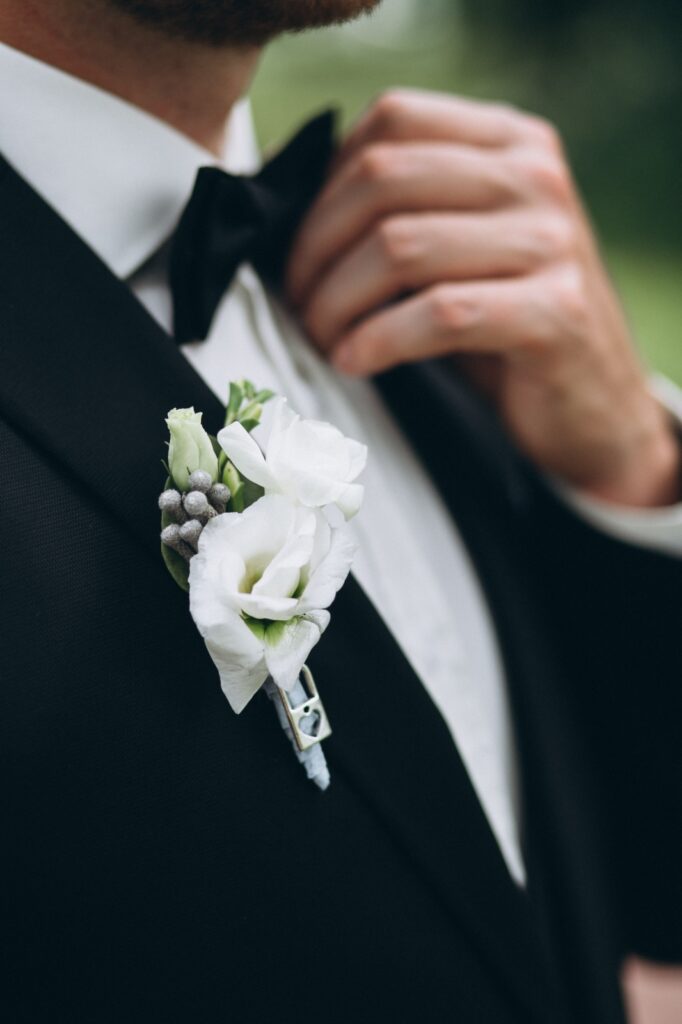

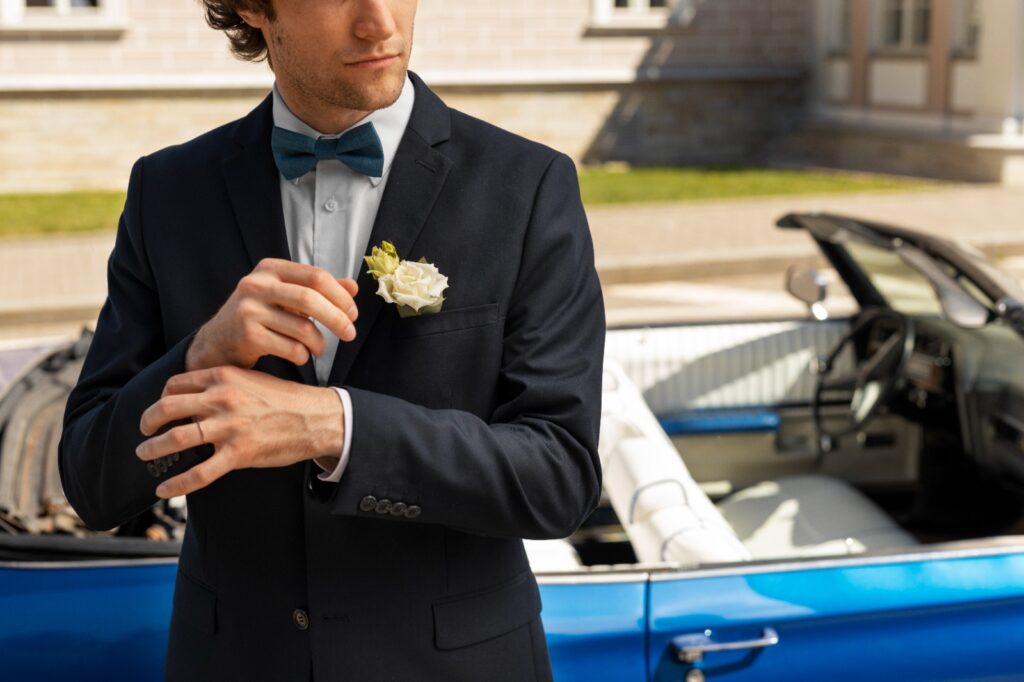
Un traje bien cortado se reconoce en cinco centímetros, los que separan el puño de la camisa del puño del saco. El hombro es lo único que un sastre no puede arreglar sin desarmar la prenda, si el hombro le queda, todo lo demás se ajusta, si le queda grande, devuélvalo. El largo del saco debe cubrir el glúteo y terminar donde el pulgar se curva al dejar el brazo caído, la manga debe dejar ver un centímetro y medio de camisa, el pantalón rompe una sola vez sobre el zapato, o no rompe. Sobre la ocasión, el esmoquin pertenece a la noche, después de las seis, y exige moño, camisa de plastrón y faja o chaleco, el chaqué pertenece a la mañana, un traje de tres piezas sirve a cualquier hora y cualquier clima que no sea el de la bahía en agosto. Sobre la tela, lana fresca de 240 gramos para climas templados, lino o mezcla de lino y seda para Vallarta, sabiendo que el lino se arruga y que esa arruga es parte del diseño, la lana tropical de peso bajo resuelve el calor sin renunciar a la caída. Sobre el color, azul marino favorece a más hombres que el negro y fotografía mejor bajo luz cálida, el negro absoluto se traga los detalles en interiores oscuros, el gris perla pertenece al mediodía. Mándelo a medida con doce semanas de anticipación, tres pruebas y una regla final, el novio debe parecer una versión mejor de sí mismo, nunca disfrazada, si en la fotografía de bienvenida el padrino no lo reconoce, algo salió mal.
How to Choose? The Suit That Defines the Groom, The Groom's Suit
A well tailored suit reveals itself within two inches, the space between the shirt cuff and the jacket sleeve. The shoulders are the one element a tailor cannot truly correct without rebuilding the garment. If the shoulders fit, everything else can be adjusted, if they do not, return the suit. The jacket should cover the seat and end where the thumb naturally curves with the arm relaxed, the sleeve should reveal about half an inch of shirt cuff, the trousers should break once over the shoe, or not at all. The occasion determines the formality. A tuxedo belongs to the evening, after six o'clock, and calls for a bow tie, formal shirt, and either a cummerbund or waistcoat. Morning dress belongs before noon. A three piece suit works beautifully at almost any hour, except perhaps during August on the shores of Banderas Bay. Fabric matters just as much, lightweight wool around eight ounces is ideal for temperate climates, linen or linen blended with silk performs beautifully in Puerto Vallarta, provided you accept that wrinkles are part of linen's character, lightweight tropical wool handles the heat while preserving a graceful drape. As for color, navy flatters more men than black and photographs better under warm light, true black tends to absorb detail in dim interiors, while pearl gray belongs to midday celebrations. Have the suit made at least twelve weeks in advance, allow for three fittings, and follow one final rule, the groom should look like the best version of himself, never like someone wearing a costume. If the best man does not recognize him in the welcome photograph, something has gone wrong. Everything else is left to the music, a poorly planned celebration in a spectacular venue is still a poor celebration, while a remarkable celebration in a modest setting becomes a memory people cherish for years.